

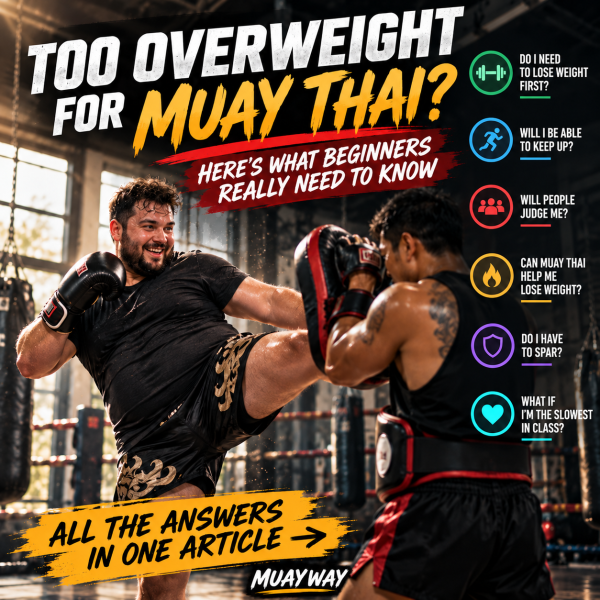
Too Overweight for Muay Thai? 12 Questions Beginners Are Afraid to Ask
“I want to try Muay Thai, but I'm overweight. Should I lose weight first?”
If you've ever asked yourself this question, you're definitely not the only one.
Scroll through Muay Thai discussions on Reddit and you'll find people asking the same things: Will I survive my first class? Will everyone stare at me? What if I can't kick properly? What if I'm the biggest person in the gym?
Some have wanted to try Muay Thai for years but keep putting it off.
Others have already attended one class, enjoyed it, and then wondered whether they were fit enough to continue.
So let's answer the questions people really want to ask — without unrealistic promises or complicated fitness advice.
1. Can I Start Muay Thai If I'm Overweight?
Yes, in many cases you can.
You don't need to look like a professional fighter to begin learning Muay Thai.
People join gyms for different reasons. Some want to compete. Others want to get stronger, become more active, improve their confidence, or simply enjoy a new sport.
Your weight alone doesn't tell a coach everything about your ability to train.
What matters is choosing an appropriate starting level, learning good technique, and making sure the training suits your health and current fitness.
If you've been inactive for a long time, have a medical condition, or are unsure whether strenuous exercise is safe for you, check with a healthcare professional before starting intense classes.
2. Should I Lose 10 or 20 Kilograms Before Joining?
Not necessarily.
This is one of the most common questions in online martial arts communities.
It's understandable. People imagine that they must first lose weight, improve their stamina, and become flexible enough to kick.
But you can start learning basic technique while gradually improving your fitness.
If you want to lose weight, you can work on that alongside your training.
There's no universal number on the scale you must reach before your first lesson.
3. What If I Can't Finish the Warm-Up?
Tell your coach and take a break.
A typical Muay Thai warm-up might include jogging, jumping rope, squats, or other conditioning exercises.
For a beginner who hasn't exercised regularly, even the warm-up can feel difficult.
And that's something a good coach should understand.
You may be able to walk instead of run, reduce repetitions, or replace jumping exercises with lower-impact movements.
Your first training session should help you learn, not leave you completely exhausted.
4. Will Everyone Stare at Me Because I'm Bigger?
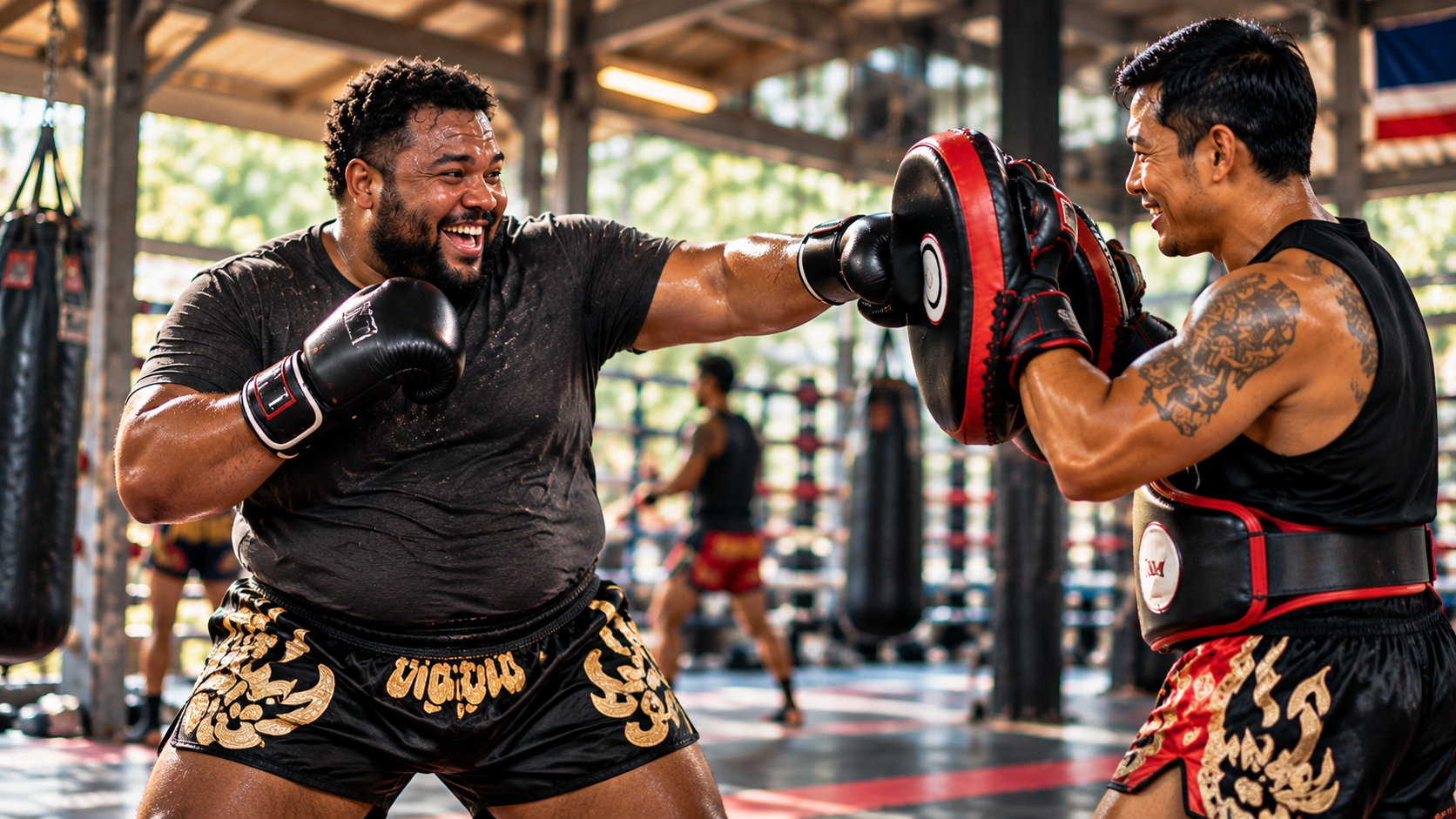
AI-generated illustration for editorial purposes.
You might feel self-conscious, but a good gym shouldn't make you feel unwelcome.
This fear appears repeatedly in discussions among people considering martial arts.
It's easy to walk into a gym, see experienced athletes, and imagine that everyone is judging your body.
In reality, many training partners are busy concentrating on their own technique and trying to get through their own workouts.
Of course, every gym is different.
A welcoming coach, respectful training partners, and beginner-friendly classes make a huge difference.
If a gym mocks your weight, pressures you to do exercises you cannot safely perform, or makes you feel uncomfortable, look for another one.
5. Can Muay Thai Actually Help Me Lose Weight?
Yes, Muay Thai can support weight loss, but it isn't a magic solution.
Training involves movement, coordination, and physical effort. Regular practice can help you become more active and improve your fitness.
However, weight loss depends on several factors, including your eating habits, overall activity, sleep, and individual circumstances.
Some people lose weight when they start Muay Thai. Others notice changes in stamina and fitness before they see much difference on the scale.
And not everyone trains to lose weight.
You can enjoy Muay Thai and become more skilled regardless of whether your body weight changes.
6. What If I'm Out of Breath After Just a Few Minutes?
Slow down. Your fitness can improve gradually.
Muay Thai can be demanding, even for people who are already active in other sports.
Footwork, punches, kicks, and pad work use the body in unfamiliar ways.
You may need shorter rounds and more recovery time when you first begin.
Start with manageable effort and increase it gradually as your conditioning improves.
Being tired during exercise is one thing. Chest pain, fainting, severe dizziness, or unusual breathlessness are reasons to stop and seek medical advice.
There is no prize for ignoring warning signs.
7. Will My Knees and Ankles Handle Muay Thai?
It depends on your current condition and how you train.
Muay Thai includes pivoting, kicking, and sometimes jumping or running.
These movements can place considerable demands on the legs and joints.
If you already experience knee, ankle, or foot pain, tell your instructor before class.
You may need to focus on controlled technique, lighter pad work, and lower-impact conditioning rather than jumping or high-volume kicking.
Sharp or persistent pain isn't something to push through.
The goal is to build a training routine you can continue, not to do too much on the first day.
8. Do I Have to Spar or Get Hit?
No.
You can begin Muay Thai without taking part in sparring.
Many people train for fitness, technique, or recreation without wanting to fight.
Beginners can practice:
Shadowboxing
Basic punches and kicks
Footwork
Controlled partner drills
Pad work
Heavy bag training
You should be able to discuss contact levels with your coach.
Hard sparring should never be a surprise or something you're pressured into.
9. What If I'm Not Flexible Enough to Kick High?
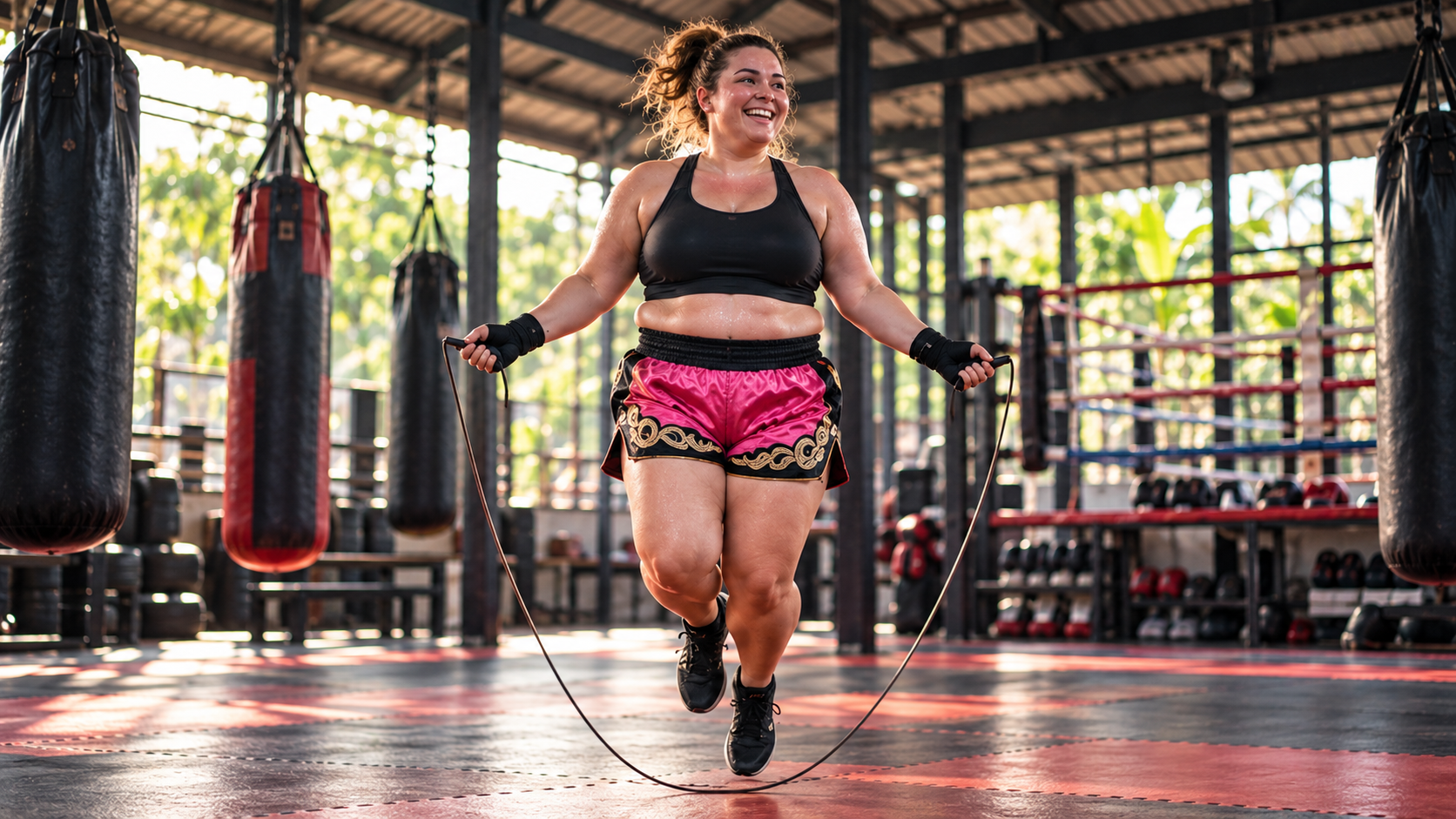
AI-generated illustration for editorial purposes.
You don't need head-height kicks on day one.
A common misconception is that every Muay Thai student must be able to kick like a professional fighter.
In reality, beginners first need to learn balance, stance, body position, and safe technique.
A controlled low kick or a simple knee strike is a perfectly reasonable place to begin.
As you practice, your movement skills may improve.
Don't force your body into painful positions just because someone else can kick higher.
Good technique matters more than showing off.
10. How Often Should an Overweight Beginner Train?
Start with a schedule you can recover from.
For someone who has been inactive, one or two beginner-friendly sessions per week may be a reasonable starting option, depending on their health and fitness.
You might also add comfortable walking, cycling, or other low-impact activity between training days.
There's no need to copy the schedule of someone who has been training for years.
Pay attention to how you feel between sessions.
If you're constantly exhausted, your joints hurt, or you're struggling to recover, the training may need adjusting.
Consistency matters more than trying to do too much.
11. What Should I Wear to My First Muay Thai Class?
Something comfortable that lets you move freely.
You don't need expensive equipment to try your first lesson.
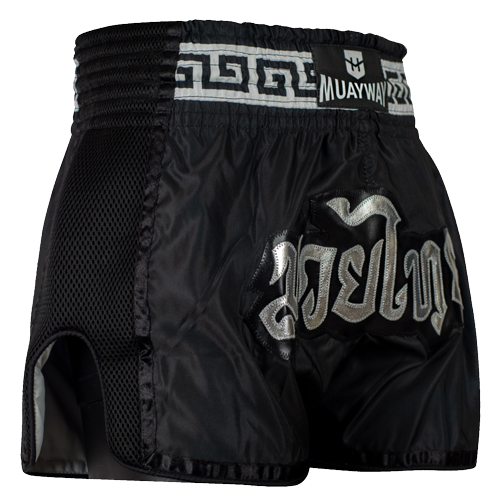
A breathable T-shirt and comfortable athletic shorts are a good starting point.
Choose shorts that allow you to lift your knees and kick without feeling restricted.
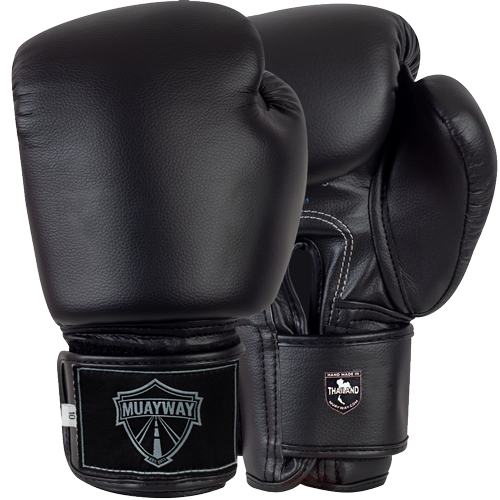
Ask the gym whether you need to bring boxing gloves, hand wraps, or other equipment. Some gyms have loaner gear for beginners.
Bring water and a towel.
Most importantly, choose clothes that make you feel comfortable and allow you to concentrate on training.
12. What If Everyone Improves Faster Than Me?
You don't have to match anyone else's progress.
One of the hardest parts of beginning any sport is comparing yourself with other people.
Someone may learn a combination faster. Another person may have better stamina. Someone else might kick higher.
That doesn't mean you're doing badly.
A useful way to measure progress is to compare what you can do now with what you could do when you started.
Can you complete a little more of the warm-up?
Are your punches more controlled?
Do you understand your stance better?
Are you feeling more comfortable in class?
Those things count.
Real Experiences: What Overweight Muay Thai Students Say
Online Muay Thai communities contain encouraging stories from people who started training at very different body weights.
In one Reddit discussion, a participant described beginning Muay Thai at approximately 305 pounds (138 kg) and later continuing to train and teach after significant weight loss.
Another person said they started at nearly 150 kg. They didn't lose as much weight as they had hoped, but gradually became capable of training several times a week.
These are individual experiences, not guaranteed results.
They do, however, remind us that people come to martial arts with different starting points and goals.
Perhaps the most useful advice from these discussions is simple: don't confuse being a beginner with being incapable.
Your First Muay Thai Class: A Simple Checklist
Before your first session:
Find a gym offering beginner-friendly classes.
Explain your fitness level and any limitations to the coach.
Ask whether the class includes sparring.
Wear comfortable clothes and bring water.
Start slowly and take breaks when needed.
Focus on learning basic technique.
Give yourself time to recover afterward.
A good first class doesn't need to be perfect.
You don't need to finish every exercise, keep up with every student, or prove anything to anyone.
You just need a sensible introduction to the sport.
Final Answer: Do You Have to Lose Weight Before Starting Muay Thai?
For many people, no. You can begin learning Muay Thai while overweight.
The important thing is to start at a level appropriate for your fitness and health, choose a supportive gym, and build your training gradually.
If your goal is weight loss, Muay Thai may be one enjoyable part of that journey.
If your goal is confidence, fitness, learning a new skill, or simply having fun, those are equally good reasons to train.
You don't have to wait until you look like a fighter to learn Muay Thai.
Your first step doesn't have to be perfect. It just has to be appropriate for you.
AI-generated illustration for editorial purposes.
This article provides general information about recreational Muay Thai training. Individual training needs vary, especially for people with existing health conditions or injuries.
Leave a comment