FROM BANGKOK STADIUMS TO GYMS WORLDWIDE: A HISTORY OF MUAY THAI SHORTS
A fighter waits in his corner as the final notes of the Wai Kru music fade. His trainer removes the mongkhon, says a short prayer and steps through the ropes. Under the stadium lights, the fighter’s satin shorts show the name of his camp in large Thai letters. This image now seems inseparable from Muay Thai, yet the sport is much older than the clothing we associate with it.
Modern Muay Thai shorts did not come directly from an ancient military uniform, and there is no known designer who created the first pair. They appeared gradually as Thai fighting contests moved into boxing rings, adopted formal rules and became part of Bangkok’s stadium culture. Their development tells a wider story about Muay Thai itself: an old fighting tradition that entered the modern sporting world without losing its Thai identity.
A FIGHTING ART OLDER THAN ITS UNIFORM
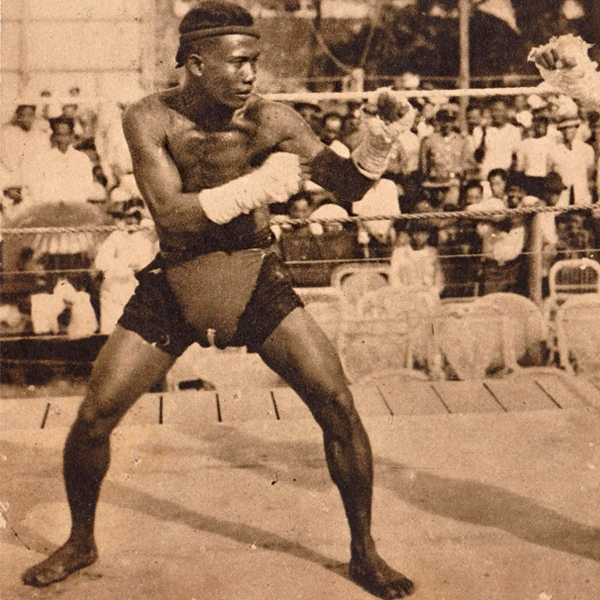
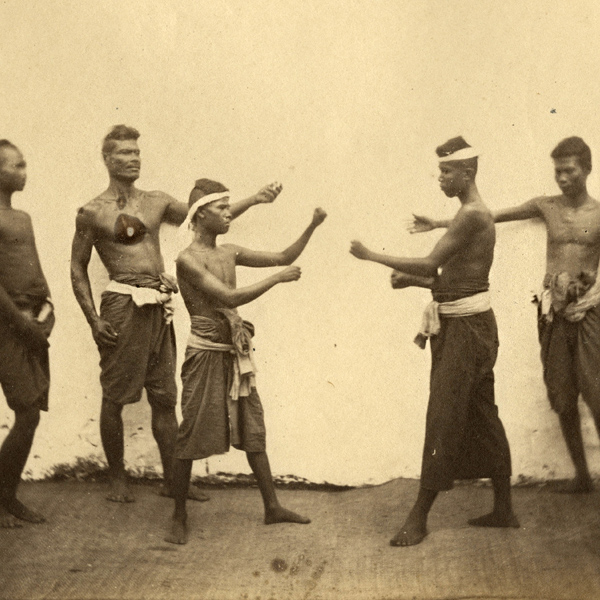
Before regulated Muay Thai, fighters from different parts of Siam competed according to local customs. Fighting methods, rules and clothing varied between regions. Fighters could wear simple cloth garments or short trousers secured around the waist, but there was no official sports uniform or standard cut recognized throughout the country.
These contests were often held at festivals, celebrations and temporary fighting grounds. Clothing was chosen for availability and practicality rather than branding or appearance.
THE RING CHANGED THE CLOTHING
During the early twentieth century, Thai fighting contests began moving toward a more organized sporting format. Boxing rings, referees, timed rounds, padded gloves and weight divisions became increasingly important. Many of these developments were influenced by international boxing, and the clothing worn by Thai fighters changed at the same time.
Western boxing trunks provided a practical model for a ring uniform. They were light, secure around the waist and clearly different from everyday clothing. Thai fighters and equipment makers adopted the basic idea but changed its proportions for a sport that also included kicks, knees and clinching. Longer or narrower trunks could tighten around the thighs when a fighter raised his leg. Thai shorts therefore became shorter and wider, providing more room to rotate the hips and lift the knees.
There was no single moment when the modern design suddenly appeared. It developed through regular use in training and competition. The version that survived was the one that fighters could wear throughout a bout without constant adjustment.
THE BEGINNING OF THE STADIUM ERA
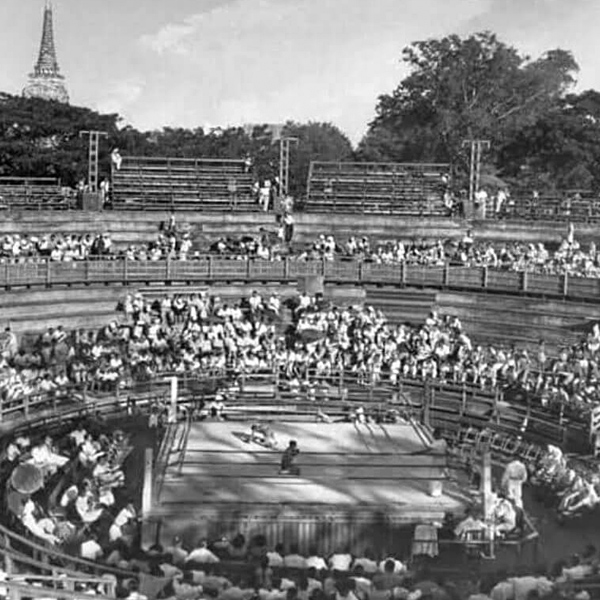
The opening of Rajadamnern Stadium in Bangkok in 1945 gave modern Muay Thai a permanent and prestigious home. The stadium created a more structured environment for competition, including rankings and championship titles. Fighters arriving from camps throughout Thailand could now compete under an organized system in front of a large audience.
Lumpinee Stadium opened in 1956 and became another major center of Thai boxing. Together, Rajadamnern and Lumpinee helped establish the appearance and traditions associated with professional stadium Muay Thai. Fighters entered the ring barefoot and without shirts, wearing gloves, groin protection and short boxing trunks.
Early pairs were generally simpler than the heavily decorated shorts sold today. Decoration became more important as successful fighters, camps and stadium champions attracted wider public attention.
RED CORNER AND BLUE CORNER
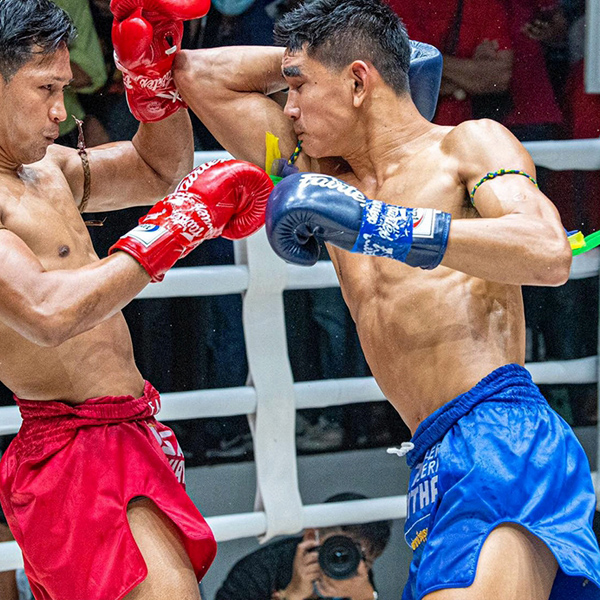
In stadium contests, one fighter entered from the red corner and the other from the blue corner. This distinction helped referees, judges and spectators follow the action. It also influenced the colors of the fighters’ shorts. In traditional Bangkok stadium Muay Thai, the more established or favored fighter was often placed in the red corner, while the challenger or underdog entered from the blue corner.
This was a common convention rather than an official guarantee of either fighter’s status. In many modern promotions, corner assignments are used mainly for identification and do not necessarily indicate who is expected to win. Traditional stadium practice also connected several related colors with each corner. Red, pink, maroon or white could represent the red corner, while blue, navy or black could represent the blue corner.
Color in Thailand can carry other associations. Each day of the week traditionally has its own color: red for Sunday, yellow for Monday, pink for Tuesday, green for Wednesday, orange for Thursday, blue for Friday and purple for Saturday. These traditions may influence a fighter’s choice, although shorts can also represent a gym, sponsor or personal preference.
THE CAMP NAME MOVES TO THE FRONT
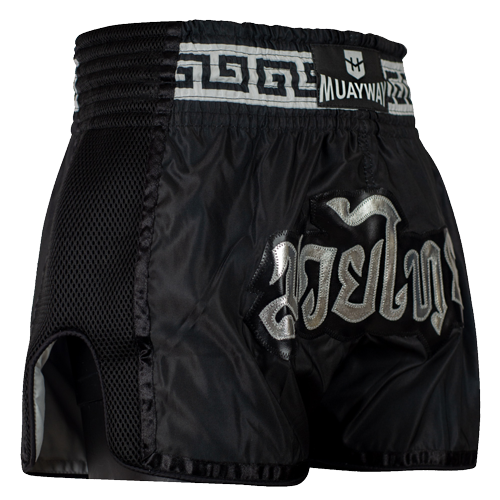
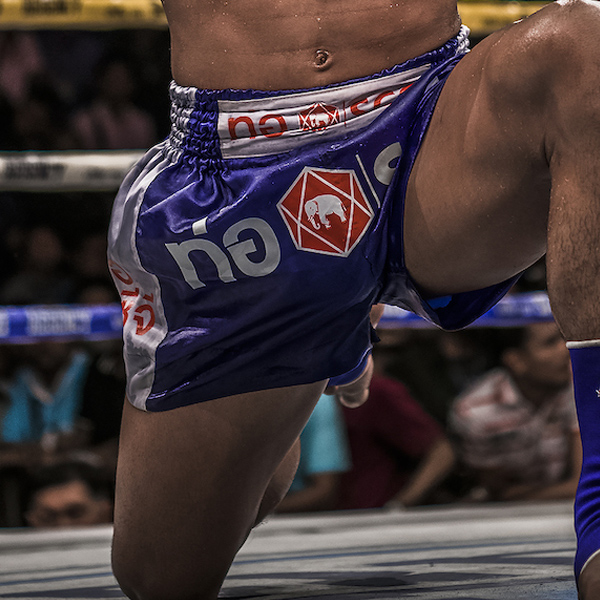
In Thailand, a fighter usually represents more than himself. He also represents the camp where he trains and the people involved in building his career. A successful athlete can bring attention to his trainers, manager and gym. The wide front panel provided an ideal place to show that connection. Some pairs carried the fighter’s name, while others displayed the gym, province or sponsor. The Thai word “มวยไทย,” meaning “Muay Thai,” also became a popular design.
The lettering needed to be visible from outside the ring. Manufacturers used large patches, strong color contrast and embroidery that stood out against the main material. Black shorts might have gold lettering, while red shorts could use white or yellow trim. Shorts gradually became part of a fighter’s public identity. Spectators could recognize a camp or athlete before the opening bell, allowing the design to introduce the fighter without changing the practical shape of the garment.
WHY SATIN BECAME THE CLASSIC MATERIAL
Satin became closely associated with Muay Thai because it was light, smooth and durable. Its low-friction surface allowed the fabric to slide more easily rather than gripping during movement and close contact.
The material also worked well with embroidery, fabric applique, contrasting borders and sewn patches. Satin could be produced in strong colors, while its glossy surface reflected the stadium lights and made large lettering and decorative details more visible.
Satin combined practical performance with the bright, distinctive appearance that became associated with stadium Muay Thai.
THAI WORKSHOPS DEVELOP THEIR OWN STYLE
Muay Thai shorts were originally produced by Thai workshops familiar with the requirements of local fighters and camps. They were not created by large international sportswear companies. Makers learned what worked by supplying people who trained and competed regularly.
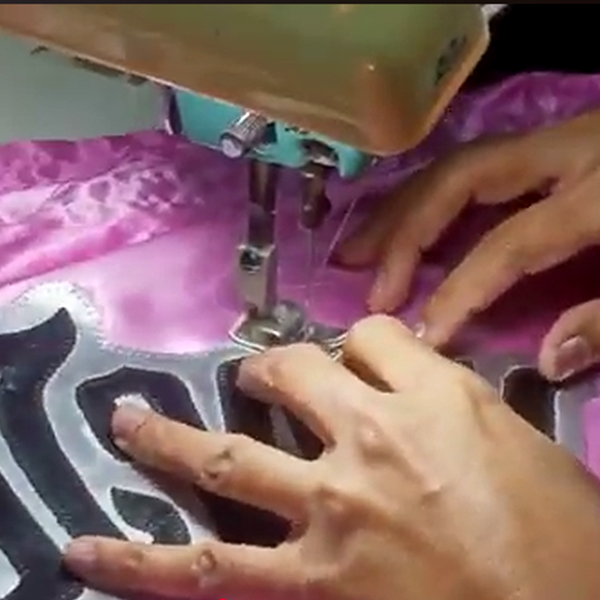
Construction varied between workshops. The width of the waistband, depth of the side opening, size of the front panel and amount of decoration depended on the maker and customer. A fighter could use a plain pair for daily training and order a more elaborate design for an important stadium appearance.
Metallic fabrics, sequins and animal images gradually expanded the visual style of Muay Thai shorts. Tigers, elephants, snakes, Garuda figures, flames and traditional patterns appeared on fightwear. Some carried cultural or personal meaning, while others were chosen simply for their visual effect.
TELEVISION MAKES THE SHORTS MORE VISIBLE
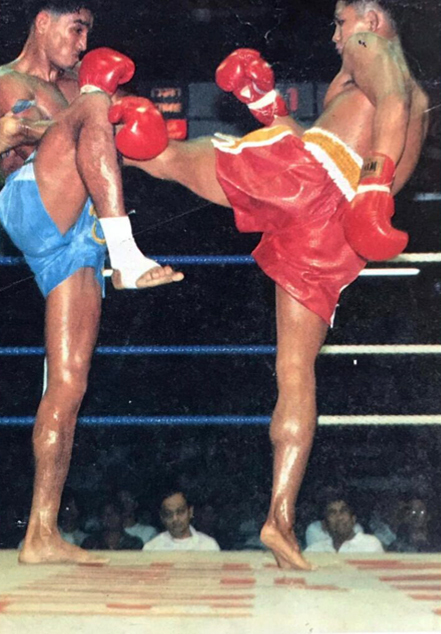
International fans learned what authentic Muay Thai looked like before Thai equipment became widely available overseas. The shorts became one of the clearest visual differences between Muay Thai and other striking sports. Television brought Muay Thai shorts to a much larger audience. Camera close-ups, repeated broadcasts and fight photography gave viewers a clearer look at corner colors, camp names and distinctive designs.Television also preserved the appearance of the famous stadium generations. Fighters from the 1980s and 1990s were often seen in high-waisted satin shorts with large front lettering and contrasting trim. Recordings and magazines carried this image far beyond Thailand.
FOREIGN FIGHTERS BRING THAI SHORTS HOME
As more international students traveled to Thailand, Thai shorts began appearing in gyms across Europe, North America, Australia and other parts of Asia. Visitors bought them at training camps, stadium shops and small equipment stores. The shorts were useful training equipment, but they also became reminders of time spent learning Muay Thai in Thailand.
Thai trainers who moved overseas carried the same clothing traditions with them. Their students learned the techniques, rituals and training methods of the sport. By the end of the twentieth century, the shape of Thai shorts was internationally recognizable even among people who could not read the lettering.
Growing international demand helped Thai fightwear companies expand. Small workshops were joined by larger manufacturers selling gloves, protective equipment, pads and clothing around the world. Despite this growth, the design remained closely connected to Thai camps and stadium competition.
TRADITIONAL AND RETRO CUTS
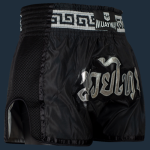
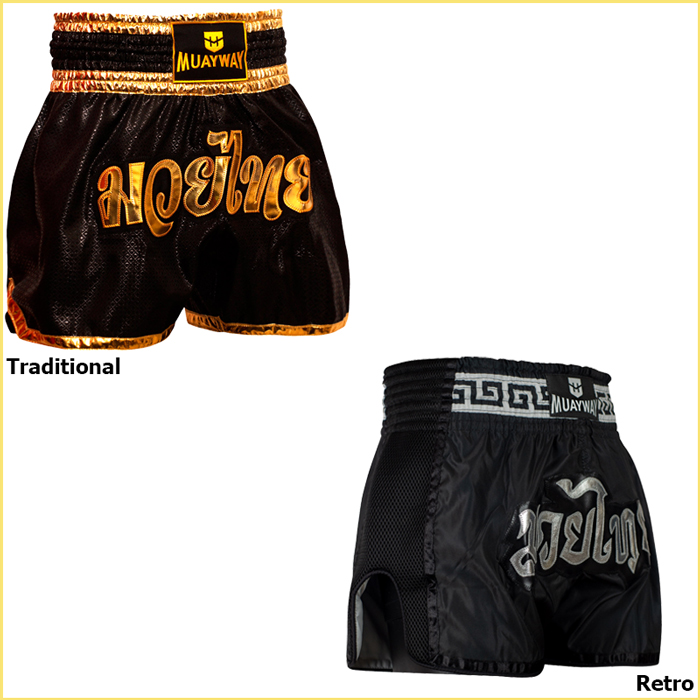
Traditional Muay Thai shorts have a wide waistband built with eight rows of firm elastic and usually include an internal drawstring. They have a loose, medium-length cut with V-shaped side openings that provide space for kicks, knees and hip rotation.
The classic design is commonly made from satin. Large lettering and ornaments are usually created with sewn applique or embroidery rather than surface printing. This remains the traditional stadium style.
Retro Muay Thai shorts take their name and appearance from the wider sporting fashion of the 1980s, when short, compact shorts were common not only in boxing but also in running, basketball, soccer and many other sports. Thai manufacturers adapted this appearance by adding curved side panels or deep openings suitable for Muay Thai.
Modern retro shorts are generally shorter, more square in shape and closer to the body than the traditional cut. They often use microfiber or polyester and may include mesh panels for ventilation.
Neither cut is automatically better. Fighters with larger thighs may prefer the additional room of traditional shorts, while others like the compact feeling of a retro design. The correct pair should remain secure and comfortable throughout training or competition.
MUAY THAI SHORTS OUTSIDE THE GYM
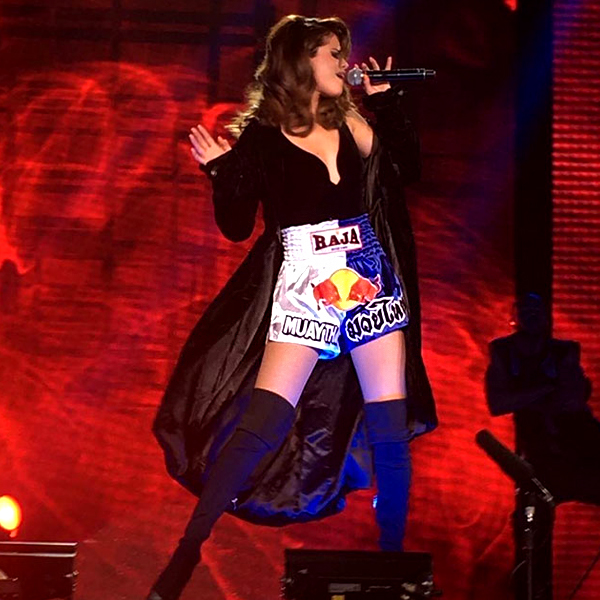
Selena Gomez performs in Bangkok wearing Raja Muay Thai shorts.
The distinctive design eventually attracted attention from the fashion industry. Bright colors, satin materials and oversized lettering began appearing in streetwear, music videos and photo shoots. Similar shorts are now worn by people who have never trained in Muay Thai.
Fashion versions may copy the appearance without being suitable for training. Their waistbands, seams and overall construction may not withstand the demands of regular practice. The difference is not always visible in a photograph, but it becomes obvious during a hard training session.
Real Muay Thai shorts are athletic equipment first. They must withstand sweat, repeated washing and constant use. Decoration matters, but it cannot replace correct construction.
A DESIGN CREATED BY FIGHTERS
The modern shape of Muay Thai shorts was not created by one designer or one fashion trend. It developed through years of training, stadium competition and practical experience. Western boxing trunks provided an early model, but Thai fighters and manufacturers transformed that model into something distinctly their own.
The shorts continued to evolve as stadium culture, television and international training changed the sport. Materials became lighter, designs became more elaborate and new cuts appeared, but each stage remained connected to the experience of the people who wore and produced them.
Muay Thai shorts are both working equipment and a visible part of Thai sporting culture. Their history can be read in their shape, materials, colors and lettering, all of which reflect the development of Muay Thai itself.

Leave a comment