
Already have soccer shin guards? Thinking of using them for Muay Thai training to save some money? It might seem like a clever idea, but there's a reason experienced fighters and coaches don't recommend it.
Both types of shin guards are designed to protect your legs, but they serve very different purposes. Soccer players need protection from incoming tackles and collisions, while Muay Thai fighters need equipment that cushions repeated kicks, blocks, and contact with training partners.
So what's the real difference, and why does it matter? Let's answer seven questions every beginner should know.
1. Aren't Soccer and Muay Thai Shin Guards Basically the Same?
No. They're designed for different sports and different kinds of contact.
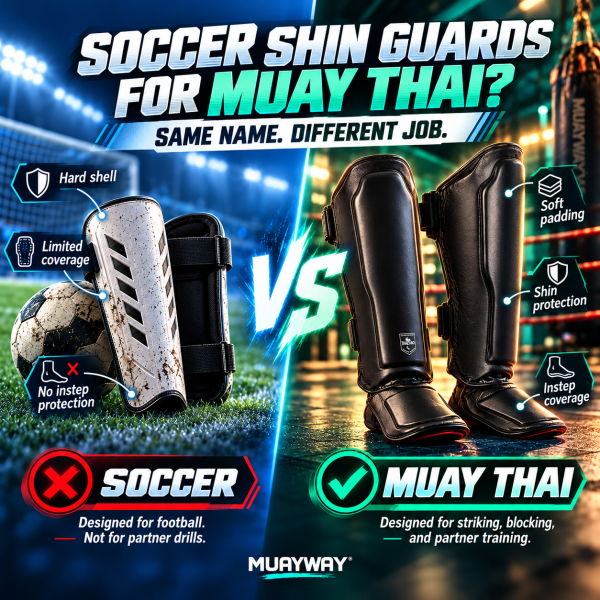
Soccer shin guards primarily protect the front of a player's lower leg from kicks and collisions. Most traditional designs feature a hard plastic shell with cushioning underneath, helping distribute the force of an impact.
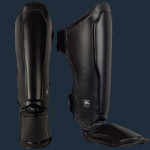
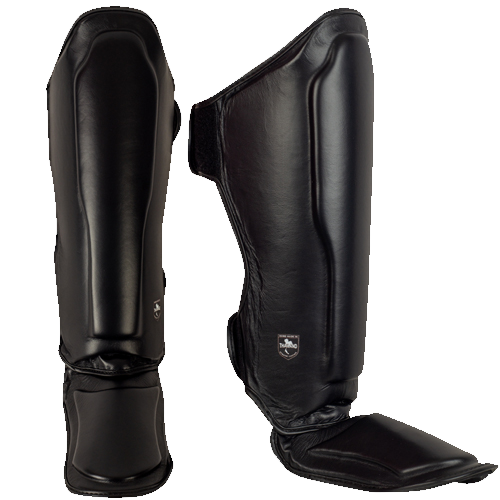
Muay Thai shin guards, on the other hand, are designed for repeated kicking, blocking, and controlled partner training. They typically feature thicker foam padding, softer exterior materials, and additional protection over the top of the foot.
The biggest difference isn't simply how they look. It's what happens when the shin guard makes contact with another person.
2. Why Is Hard Plastic a Problem in Muay Thai?
Because in Muay Thai, you're not just receiving kicks. You're also delivering them.
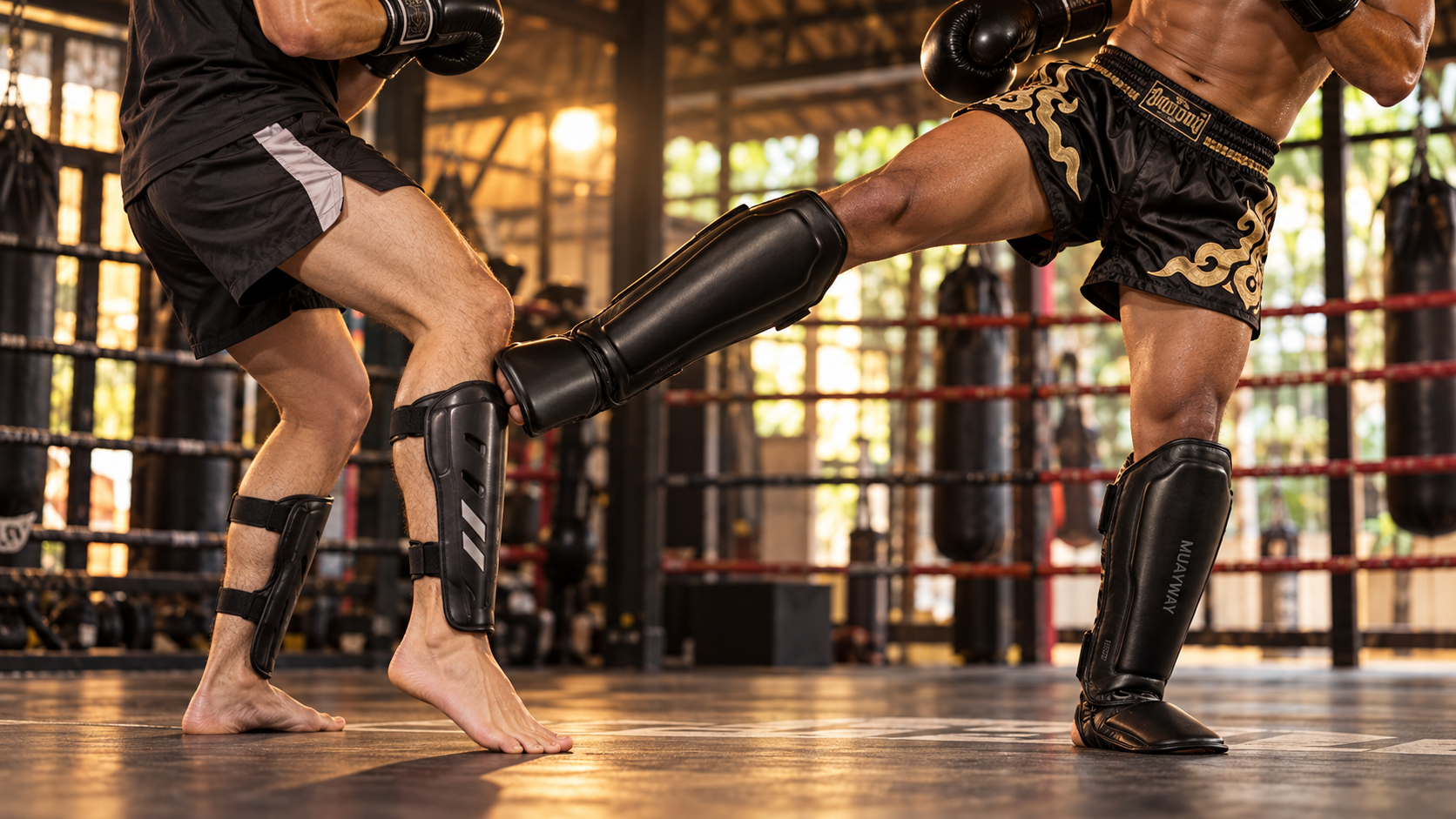
In soccer, a hard plastic shell helps protect your shin from incoming impacts. But imagine throwing a roundhouse kick during Muay Thai sparring while wearing that same rigid plastic guard. Your partner could receive a hard impact against their ribs, arm, or thigh.
Unlike soccer equipment, proper Muay Thai sparring guards are designed with cushioning on the outside. Their padding helps soften contact during controlled kicks and blocks, making training more comfortable for both participants.
Of course, even the best Muay Thai shin guards won't make powerful kicks harmless. Good technique, controlled intensity, and respect for your training partner remain essential.
3. What's the Instep, and Why Does It Need Protection?
The instep is the top of your foot — and it's one of the areas beginners often forget about.
During Muay Thai, fighters generally aim to connect with the shin when throwing roundhouse kicks. However, kicks don't always land perfectly, particularly when you're learning. Sometimes the top of your foot catches your partner's elbow, knee, or another hard surface.
Most soccer shin guards leave the instep completely exposed because football doesn't require the same type of striking protection. Muay Thai sparring guards usually include an attached padded section covering this area.
That extra padding is one of the most obvious and important differences between the two types of equipment.
4. Do Muay Thai Shin Guards Protect My Training Partner Too?
Yes! And that's one of the most important reasons to wear them.
Many beginners think protective equipment is only about preventing their own injuries. But Muay Thai involves close contact, kicks, blocks, and partner drills, so your equipment affects the other person as well.
Properly padded shin guards help cushion contact from your shin and foot, reducing the force transmitted during controlled sparring. That's why experienced coaches often insist on equipment designed specifically for Muay Thai or kickboxing.
Think of it this way: choosing the right shin guards isn't just about protecting yourself. It's also about being a responsible training partner.
5. Can I Use Soccer Shin Guards for Heavy Bag Training?
For ordinary heavy bag training, you usually don't need sparring shin guards at all.
Many Muay Thai practitioners train barefoot and without shin protection when working on heavy bags or Thai pads. These exercises help develop technique, timing, accuracy, and controlled striking.
Beginners sometimes experience shin tenderness because their legs aren't accustomed to repeated contact. If you need extra cushioning, ask your coach which type of protection is appropriate rather than automatically reaching for your old soccer guards.
Remember that equipment suitable for solo drills isn't necessarily appropriate for sparring. If you experience sharp or persistent pain, stop and address the problem rather than trying to hide it beneath extra padding.
6. What About Those Tiny Soccer Shin Guards?
Here's an interesting fact: even football has debates about how much protection a shin guard should provide.
Some professional football players prefer extremely small shin guards because they're lightweight and less noticeable during matches. However, their reduced coverage has raised questions about whether they're offering enough protection.
In 2024, football's rule-making body, IFAB, clarified that shin guards must be appropriately sized and made from suitable materials to provide reasonable protection. Players are responsible for the size and suitability of the guards they wear.
The lesson applies beyond football: just because something is called a shin guard doesn't mean it provides the right protection for every situation. A miniature football guard certainly isn't a substitute for full shin-and-instep protection during Muay Thai sparring.
7. What Should Beginners Look for in Muay Thai Shin Guards?
You don't need the most expensive pair in the store. You need a pair that fits properly and is suitable for your training.
When choosing Muay Thai shin guards, pay attention to five important features:
- Shin coverage: The padded section should protect your shin without pressing uncomfortably against the kneecap.
- Instep protection: Look for padding that covers the top of your foot during sparring and contact drills.
- Comfortable cushioning: The guards should provide adequate padding without making movement excessively awkward.
- Secure straps: Your shin guards shouldn't constantly rotate, slide down, or move out of position when kicking.
- Correct size: Guards that are too small leave areas exposed, while oversized guards may interfere with movement.
A good fit is just as important as the materials. Try a few controlled kicks, checks, and steps to make sure the guards stay securely in position.
Also remember that individual gyms and amateur competitions may have specific equipment requirements. Always check with your coach before using new protective gear.
Soccer vs. Muay Thai Shin Guards: Quick Comparison
| Feature | Soccer | Muay Thai |
|---|---|---|
| Purpose | Football impacts | Kicks and blocks |
| Outer material | Often hard plastic | Padded covering |
| Shin protection | Front-focused | Training contact |
| Instep protection | Usually absent | Typically included |
| Partner safety | Not for striking | Cushions contact |
| Sparring | Generally unsuitable | Coach-approved |
Can I Save Money by Using My Old Soccer Guards?
It's understandable to look for ways to save money when you're starting Muay Thai. Between boxing gloves, hand wraps, shorts, and gym membership, the cost of getting started can add up quickly.
However, using equipment designed for the wrong sport isn't always a smart saving. Soccer guards may already be sitting in your sports bag, but they don't offer the same type of protection required for regular Muay Thai partner training.
If you're on a limited budget, ask your gym whether they provide loaner equipment or recommend affordable beginner models. You can also focus on supervised non-contact technique work until you have suitable protective gear.
You don't need premium equipment from day one. A comfortable, properly fitted pair of Muay Thai-specific shin guards is a much better starting point.
Final Verdict: Same Name, Different Protection!
Soccer and Muay Thai shin guards may share a name, but they're designed for entirely different types of contact. Football guards primarily protect the wearer against incoming impacts, while Muay Thai guards are intended to cushion kicks, blocks, and repeated contact during partner training.
The biggest differences are the outer padding, instep coverage, and suitability for controlled sparring. That's why replacing proper Muay Thai protection with hard-shell soccer guards is generally a bad idea.
Before your next training session, remember one simple rule: your equipment should help protect your partner, not just yourself.
Equipment requirements may vary between gyms and competitions. Always follow your coach's safety instructions.
Images used in this article are AI-generated editorial illustrations.
Leave a comment